
What are the latest trends in AI?
Artificial Intelligence (AI) has been rapidly advancing and transforming various sectors, including healthcare, finance, automotive, and more. As AI technologies continue to evolve, several key trends are emerging that highlight the future directions and innovations in this field. Here are some of the latest trends in AI:
1. AI and Machine Learning Integration
AI and machine learning (ML) are becoming increasingly integrated into everyday applications. Businesses are leveraging AI to analyze vast amounts of data, automate processes, and enhance decision-making. Machine learning models are being used to predict customer behavior, optimize supply chains, and improve operational efficiency.
2. Natural Language Processing (NLP)
NLP has seen significant advancements, enabling machines to understand and generate human language more effectively. AI models like OpenAI’s GPT-4 are capable of producing coherent and contextually relevant text. These advancements are driving improvements in chatbots, virtual assistants, and automated content creation.
3. AI in Healthcare
AI is revolutionizing healthcare by enhancing diagnostic accuracy, personalizing treatment plans, and predicting patient outcomes. Machine learning algorithms are being used to analyze medical images, identify patterns in patient data, and assist in drug discovery. Telemedicine platforms are also integrating AI to provide remote diagnostics and consultations.
4. Edge AI
Edge AI involves processing data locally on devices rather than relying on cloud-based systems. This trend is driven by the need for real-time data processing and reduced latency. Applications of edge AI include autonomous vehicles, smart cameras, and IoT devices. It allows for faster decision-making and improved privacy and security.
5. Explainable AI (XAI)
As AI systems become more complex, there is a growing need for transparency and accountability. Explainable AI aims to make AI models more understandable to humans. This involves developing methods to explain how AI algorithms arrive at their decisions, which is crucial for building trust and ensuring ethical use of AI.
6. AI in Finance
The financial sector is leveraging AI for various applications, including fraud detection, algorithmic trading, and credit scoring. AI models can analyze transaction patterns to identify fraudulent activities and make real-time trading decisions based on market data. Personalized financial services and robo-advisors are also becoming more prevalent.
7. AI and Robotics
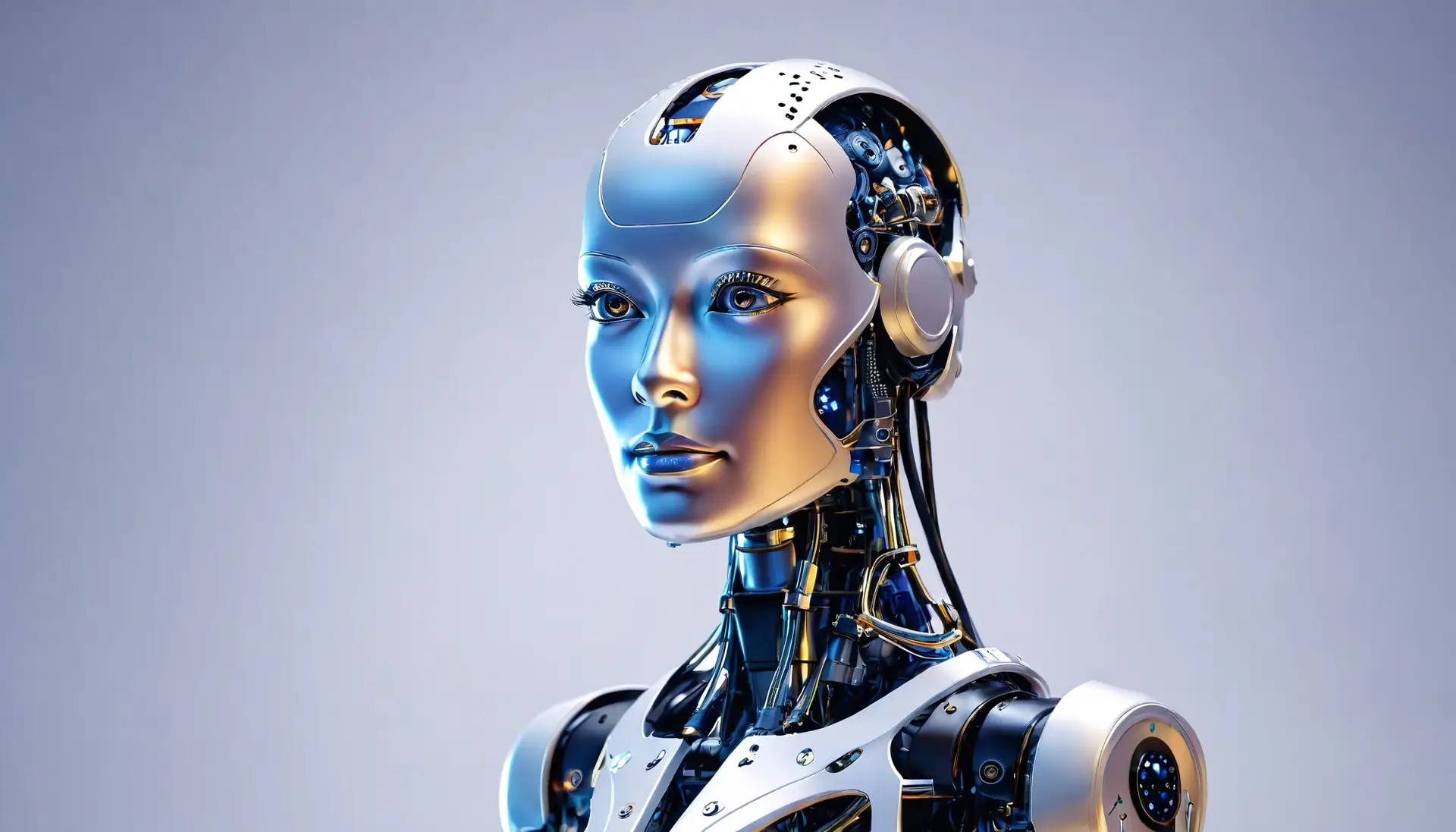
AI is enhancing the capabilities of robots, enabling them to perform more complex tasks and interact with humans more naturally. In industries such as manufacturing, AI-powered robots are improving efficiency and precision. Social robots are being developed to assist in healthcare, education, and customer service.
8. AI for Climate Change
AI is being used to address environmental challenges and combat climate change. Machine learning models can analyze climate data to predict weather patterns, optimize renewable energy production, and monitor deforestation. AI is also being used in smart agriculture to improve crop yields and reduce resource usage.
9. AI in Creative Industries
AI is making significant strides in creative fields such as art, music, and writing. AI-generated artwork and music compositions are gaining recognition, and AI tools are being used to assist writers and designers. These advancements are pushing the boundaries of creativity and opening up new possibilities for artistic expression.
10. AI Ethics and Governance
With the increasing adoption of AI, ethical considerations and governance are becoming more important. Organizations and governments are developing frameworks to ensure the responsible use of AI. This includes addressing biases in AI models, protecting privacy, and ensuring fairness and accountability.
11. AI in Education
AI is transforming education by providing personalized learning experiences and automating administrative tasks. Intelligent tutoring systems can adapt to individual learning styles and provide targeted feedback. AI-powered tools are also helping educators analyze student performance and identify areas for improvement.
12. AI and Cybersecurity
AI is playing a crucial role in enhancing cybersecurity by detecting and responding to threats in real-time. Machine learning algorithms can identify unusual patterns of behavior and predict potential cyber-attacks. AI is also being used to automate security operations and improve threat intelligence.
13. AI for Enhanced Customer Experience
Businesses are using AI to enhance customer experience through personalized recommendations, chatbots, and virtual assistants. AI algorithms analyze customer data to provide tailored product suggestions and improve customer service. This trend is particularly evident in e-commerce, where AI is helping retailers optimize their sales strategies.
14. AI in Autonomous Systems
Autonomous systems, such as self-driving cars and drones, rely heavily on AI for navigation, decision-making, and safety. Advances in AI are improving the accuracy and reliability of these systems, bringing us closer to a future where autonomous vehicles are commonplace.
15. AI in Smart Cities
AI is being integrated into smart city initiatives to improve urban living. AI-powered systems are used for traffic management, energy optimization, and public safety. Smart city projects aim to create more efficient, sustainable, and livable urban environments through the use of AI and IoT technologies.
These trends highlight the broad and transformative impact of AI across various domains. As AI technology continues to evolve, it will likely bring about even more significant changes, driving innovation and creating new opportunities in multiple industries.
conclusion
The rapid advancements in artificial intelligence are reshaping industries, enhancing capabilities, and driving innovation across various sectors. From healthcare and finance to education and creative industries, AI is enabling new possibilities and improving efficiencies. The trends in AI, such as the integration of machine learning, advancements in natural language processing, and the rise of edge AI, highlight the diverse applications and transformative potential of this technology.
However, as AI becomes more integrated into our daily lives, it is crucial to address ethical considerations, ensure transparency, and develop robust governance frameworks. The focus on explainable AI and responsible AI use underscores the need for accountability and trust in AI systems.
The future of AI is filled with promise, offering opportunities for enhanced customer experiences, autonomous systems, and smart city developments. As we continue to explore and expand the capabilities of AI, it is essential to approach these advancements with a balanced perspective, embracing the benefits while addressing the challenges and ethical implications.
The trends in AI reflect a dynamic and evolving landscape that holds great potential to transform industries and improve lives. By leveraging these technologies responsibly and ethically, we can harness the power of AI to create a more innovative, efficient, and equitable future.
People also ask
1.What is the next generation of AI?
The next generation of AI, known as Artificial General Intelligence (AGI), aims to develop machines with human-like cognitive abilities, capable of understanding and learning across a wide range of tasks. It focuses on creating versatile, adaptable AI systems that can reason, plan, and solve problems in diverse contexts.
2.What is the newest technology in AI?
One of the newest technologies in AI is Generative AI, particularly advancements in large language models like OpenAI’s GPT-4 and image generation models like DALL-E. These models are capable of generating human-like text, images, and even code, based on a given prompt. They are being used for a variety of applications, including content creation, chatbots, and creative tasks. Additionally, there are significant advancements in reinforcement learning and edge AI, which are making AI more efficient and accessible for real-time applications.
3.What is the latest AI robot?
The latest AI robots include Ameca, a humanoid robot with advanced facial expressions and communication abilities by Engineered Arts, and Atlas, a highly agile robot by Boston Dynamics known for its impressive mobility and complex task performance. These robots represent the forefront of AI and robotics integration.
FAQs
1. What is Artificial Intelligence (AI)?
AI refers to the simulation of human intelligence in machines that are programmed to think and learn like humans. These machines can perform tasks that typically require human intelligence, such as understanding natural language, recognizing patterns, and making decisions.
2. How does AI work?
AI works by using algorithms and computational models to process data, learn from it, and make decisions or predictions. This process often involves machine learning, where algorithms improve their performance over time as they are exposed to more data.
3. What are the types of AI?
There are three main types of AI:
- Narrow AI: Designed for specific tasks, like language translation or image recognition.
- General AI: A hypothetical system that could perform any intellectual task that a human can do.
- Superintelligent AI: An advanced form of AI that surpasses human intelligence across all fields.
4. What is machine learning?
Machine learning is a subset of AI that involves training algorithms to learn from data and make predictions or decisions. It uses statistical techniques to enable machines to improve their performance over time without being explicitly programmed.
5. What is deep learning?
Deep learning is a type of machine learning that uses neural networks with many layers (deep neural networks) to analyze complex patterns in data. It is especially effective in tasks like image and speech recognition.
6. What are the applications of AI?
AI is used in a wide range of applications, including:
- Healthcare: Diagnosing diseases, personalized medicine, and medical imaging.
- Finance: Fraud detection, algorithmic trading, and credit scoring.
- Retail: Personalized recommendations, inventory management, and customer service.
- Automotive: Autonomous vehicles and driver assistance systems.
- Entertainment: Content recommendation, game design, and music composition.**